Monday, May 7, 2012

Madagascar Palm (Pachypodium lamerei)

 Family Apocynaceae
 Pachypodium lamerei is a species of Pachypodium. It has large thorns and leaves mostly just at the top of the plant. It is a stemsucculent and comes from the island of Madagascar. The plant bears large, fragrant flowers. The species has become one of the best known pachypodiums in cultivation, being relatively easy to propagate and grow.
 In cultivation it is often marketed as the "Madagascar Palm", despite its not being a palm at all. A variety called "Ramosum" has been described. It is distinguished mostly by a dwarf growth habit.

Pachypodium lamerei grows best in warm climates and full sun. It will not tolerate hard frosts, and will likely drop most of its leaves if exposed to even a light frost.
It is easy to grow as a houseplant, if you can provide the sunlight it needs. Use a fast-draining potting mix, such as a cactus mix and pot in a container with drainage holes to prevent root rot.

Saturday, May 5, 2012

Common Bush-cherry (Maerua cafra)

 Family Capparaceae
 Maerua cafra is an evergreen shrub or small tree that grows up to a height of 2-9m, depending on the local conditions. Its light-coloured trunk accounts for the common name "white-wood" or "witbos" in Afrikaans.
 Flowers are followed by oval, plum-like fruit in October - December. These are up to 45mm long, pale green with dark green ribs and reported to be edible. The illustration (right) by Gill Condy from Flowering Plants of Africa shows the flowers, fruits and leaves.
 Leaves of Maerua cafra are browsed by game and ground roots have been used as chicory substitute.
 When the fruit ripens it remains green, but becomes soft and strongly sweet smelling and is relished by many different bird species.
 Growing Maerua cafra
The common bush-cherry can be propagated from seeds which must be sown fresh.
 The germination rate is often very high, but growth is reputed to be slow with reports that plants can take 3-7 years to reach 1m.
 Commercial nurseries cannot afford to be so patient, thus Maerua cafra is not often stocked. It is a slow-growing, drought resistant shrub. If planted in the nursery bags, root development tends to be very poor.
 Some writers (Palmer & Pitman) differ, and report that it thrives in cultivation under natural conditions and flowers when small. Perhaps keen gardeners will take up this challenge.

Thursday, May 3, 2012

Castor Oil Plant (Ricinus communis)

Family Euphorbiaceae
The castor oil plant, Ricinus communis, is a species of flowering plant in the spurge family, Euphorbiaceae. It belongs to a monotypic genus, Ricinus, and subtribe, Ricininae. The evolution of castor and its relation to other species are currently being studied.
 Its seed is the castor bean which, despite its name, is not a true bean. Castor is indigenous to the southeastern Mediterranean Basin, Eastern Africa, and India, but is widespread throughout tropical regions (and widely grown elsewhere as an ornamental plant).
 Castor seed is the source of castor oil, which has a wide variety of uses. The seeds contain between 40% and 60% oil that is rich in triglycerides, mainly ricinolein. The seed contains ricin, a toxin, which is also present in lower concentrations throughout the plant.
From Wikipedia, the free encyclopedia

Tuesday, May 1, 2012

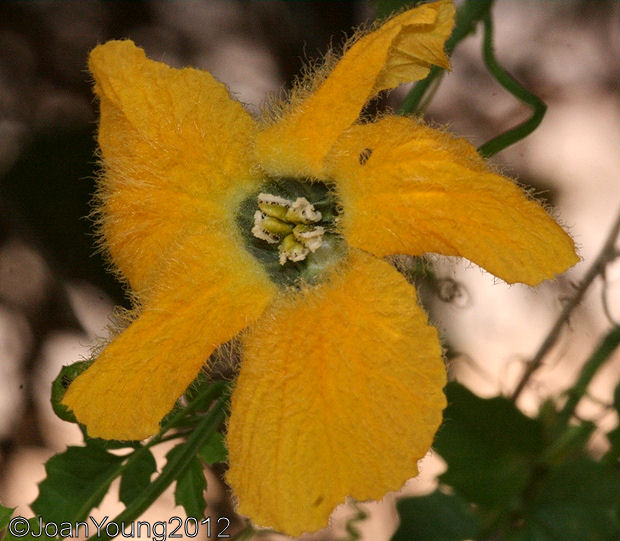
Bitter Gourd (Momordica cardiospermoides)

 Family Cucurbitaceae
This climber has a foetid smell, but makes up for it with showy orange-yellow flowers and large, fleshy, bulging orange-red ripe fruits that will attract birds to your garden.
 Distribution

M. cardiospermoides occurs from Tanzania, Malawi, Zambia, Zimbabwe, Mozambique and Botswana down to Swaziland and South Africa where it is found in the Limpopo, North-West, Gauteng and Mpumalanga provinces and in the Ingwavuma district in northern KwaZulu-Natal.

 This species grows in well-drained sandy and sandy loam soil, among rocks on granite/gneiss outcrops, also on flat areas, along river banks and roadsides. It will grow in full sun, but prefers semi-shade among trees and shrubs. It is found in various types of woodland, savanna and wooded grassland vegetation and climbs onto all kinds of trees and shrubs, also on hedges and wire fences.
 The Cucurbitaceae consists of about 120 genera and 735 species that are cosmopolitan in mostly tropical and subtropical countries. Many species are cultivated and of economic importance as food plants such as cucumber, melon, pumpkin and watermelon. Members of this family are annual or perennial herbs or shrubs (only one species is a tree). The leaves are alternate and variable and tendrils are almost always present. The flowers are mostly unisexual and white or yellow; they occur on the same plant (monoecious) or on separate plants (dioecious). The fruit often is an indehiscent berry (soft-shelled) or gourd (hard-shelled) with one to many, often flattened seeds. There are about 18 genera and 75 species of this family in southern Africa.
 Ecology

M. cardiospermoides grows from about 120- 1 100 m above sea level in areas with an annual rainfall of about 400-1 200 mm. Based on the information on specimen labels in the National Herbarium (PRE), the flowering time is from about November to April, but mainly from November to January, while the fruiting time is also from about November to April but mainly in April. Birds will certainly eat the brightly coloured and fleshy ripe fruit.


Most observers agree that M. cardiospermoides has a disagreeable smell, but a few collectors described the plant as fragrant!

 Uses and cultural aspects

In some areas the leaves of M. cardiospermoides are regarded as edible and cooked as a spinach, as stated on the label of the specimen Barnard 211 in PRE, which was collected in Mpumalanga. Another specimen in PRE, Moss BMP678, grew in a herbalist's garden in Botswana, where it was used medicinally. The fresh or dried roots were cooked and drunk for boils. Dlamini (1981) also listed M. cardiospermoides as a medicinal plant as well as a plant with edible leaves in his publication on the Swaziland flora.

Monday, April 30, 2012

Cosmos (Cosmos bipinnatus)

Family Asteraceae
Cosmos are herbaceous perennial plants growing 0.3–2 m tall. It is native to scrub and meadow areas in Mexico where most of the species occur, Florida and the southern United States, Arizona, Central America, and to South America in the north to Paraguay in the south.
 There are over 20 annual and perennial varieties of cosmos, which are part of the aster family and are related to daisies and sunflowers. They come in a variety of colors and sizes ranging from 6 feet tall to barely one foot in height. The annual flowers are easy to grow from seed, which places them on lists of plants that beginners can succeed with.
 History
Cosmos is a Greek word meaning harmony or balanced universe. To Victorians, cosmos were used to signify modesty. Cosmos is native to Central America where it grows wild, especially in Mexico. In some areas of the United States it is considered a weed because it reseeds readily and can be invasive. Mission priests in Mexico planted it in the mission garden and it often escaped to grow wild in the meadows.
 Requirements
This flower prefers less than perfect soil. When growing in rich soil, Cosmos tend to get lanky and tall. While many leaves and stems may grow, flowers are limited. Cosmos grows in either shade or sun but prefer sun. The flowers grow in hot or cool weather.
 Planting
Cosmos is an annual that is grown from seed that is simply pressed into the ground at 8- to 12-inch intervals and left uncovered. In cold climates, March is the month to plant--it is OK to plant before the last frost of the spring. Germination will take place in 7 to 20 days provided the soil around the seeds is kept moist but not soggy for about 10 days. Perennials grow from a rhizome that should be divided every three years.
 Seeds
The seeds from the annual variety of cosmos can be saved for the next year. Let some of the flowers die and stay on their stems. After the petals have fallen off, cut the stem and hang it upside down to dry. Once the seeds have turned black, pull them off the stem and seal them in a labeled envelope for the next spring.
 Uses
Cosmos lasts about 7 to 10 days after being cut for a vase. The flowers can be dried and used in dry arrangements and in potpourri. The plants are used in the landscape as a background and paired with evergreens. Cosmos attracts butterflies and birds to the garden.
Information from: http://www.gardenguides.com/109574-cosmos-flowers.html 

Saturday, April 28, 2012

Giant Honey Flower (Melianthus major)

Kruidjie-roer-my-nie -  Family Melianthaceae
 With its large grey leaves and huge bronze flowers this is a striking shrub. On a sunny day the sunbirds feast on the nectar dripping from the flowers, but any one touching those attractive leaves is in for a surprise. With a strong unpleasant smell, it warns all that it is highly toxic.
 Melianthus major or Kruidjie-roer-my-nie, which means herb-touch-me-not, is a well known plant in the south western Cape where it occurs naturally; usually along streams and roadside ditches.
 Although toxic when taken internally, it is used medicinally by the local people. They mostly use the leaves to make poultices and decoctions that are applied directly to wounds, bruises, backache and rheumatic joints.

Saturday, April 21, 2012

Drakensberg scabious (Scabiosa drakensbergensis)

 Family Dipsacaceae
A bushy scabiosa with large soft green leaves and beautiful, pure white, ball-like inflorescences with flowers packed tightly at the tips of long delicate hollow stems – the shy flowerer of this family but a ‘Princess' none the less.
Ecology
Flowers are popular with insects, particularly with bees and butterflies, which in turn attract insectivorous birds— so, this is a wonderful plant to have in a Birds, Butterflies and Bees Garden.
Uses and cultural aspects
Leaves and roots of Scabiosa are known to have medicinal uses. But this scabiosa's value is mainly horticultural. All scabiosa flowers last well in a vase.
Information from: http://www.plantzafrica.com